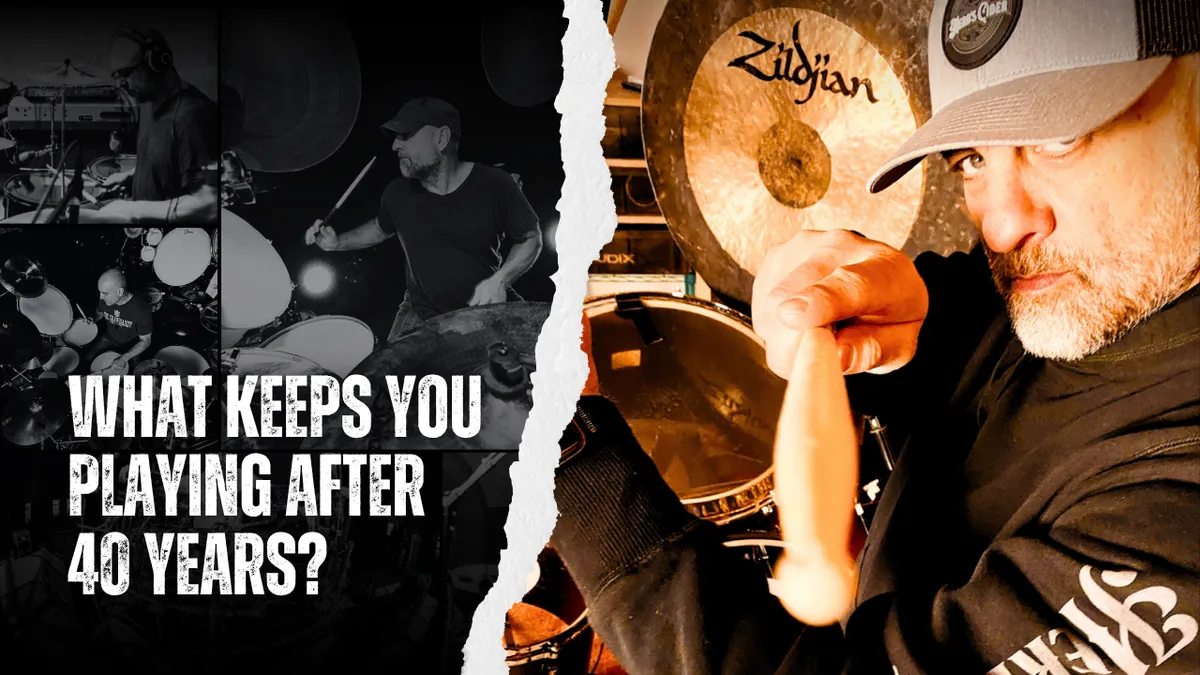
What Keeps You Playing After 40 Years?
For as long as Tim Alexander can remember, he has banged on things. He says he knew from a young age he wanted to play drums. Before the tours and recordings, before anyone connected his name to a band, there was the impulse to play.
Alexander taught himself. He does not describe his approach as a display of advanced technique. Instead, he focuses on playing what he knows well and cleanly. That distinction says something about the long arc of a musical life. The work does not have to keep getting bigger. It can keep getting more considered.
In a 2024 interview with Highway 81 Revisited, Alexander reflected on the foundations of his playing, a teenage memory that returned onstage decades later, and how he thinks about musical influence. Together, those details suggest that longevity isn't only about sustaining one kind of career. It can also mean letting an original impulse take new forms.
Tim's Approach to Drumming
Alexander describes the foundation of what he plays as a small number of rudimental ideas, combined in different ways. He avoids playing that gets busy without feeling good. His priorities are clarity and feel, not complexity for its own sake.
The models he names make that outlook more specific. He admires Bill Bruford for simplifying progressive drumming and showing that a player doesn't need many notes to make an impression. He likes John Bonham, whose playing he considers progressive even though Bonham was not a progressive rock drummer. He also listened closely to Neil Peart and points to rudiments as part of the foundation of Peart’s approach.
That is a particular way of listening. Alexander does not describe influence as a checklist of techniques to copy. He notices what makes a player’s choices work, then returns to a limited set of building blocks. The result can sound individual without requiring a constant search for something more complicated.
He has also said he never felt responsible for carrying on anyone else’s legacy. He doesn't see himself as making something just to pass it forward. When the opportunity comes up, he does try to draw attention to drummers he admires. The distinction matters. An influence can be shared without becoming an obligation. A musician can respect what came before while still making choices that belong to the present.
For any drummer trying to develop a recognizable voice, this tension is useful to sit with. The point is not to reject influence. It is to listen carefully enough to know what you are taking from it. A few musical ideas, played with intention, can carry more character than an endless supply of borrowed moves.
From Practicing Rush to Playing Rush
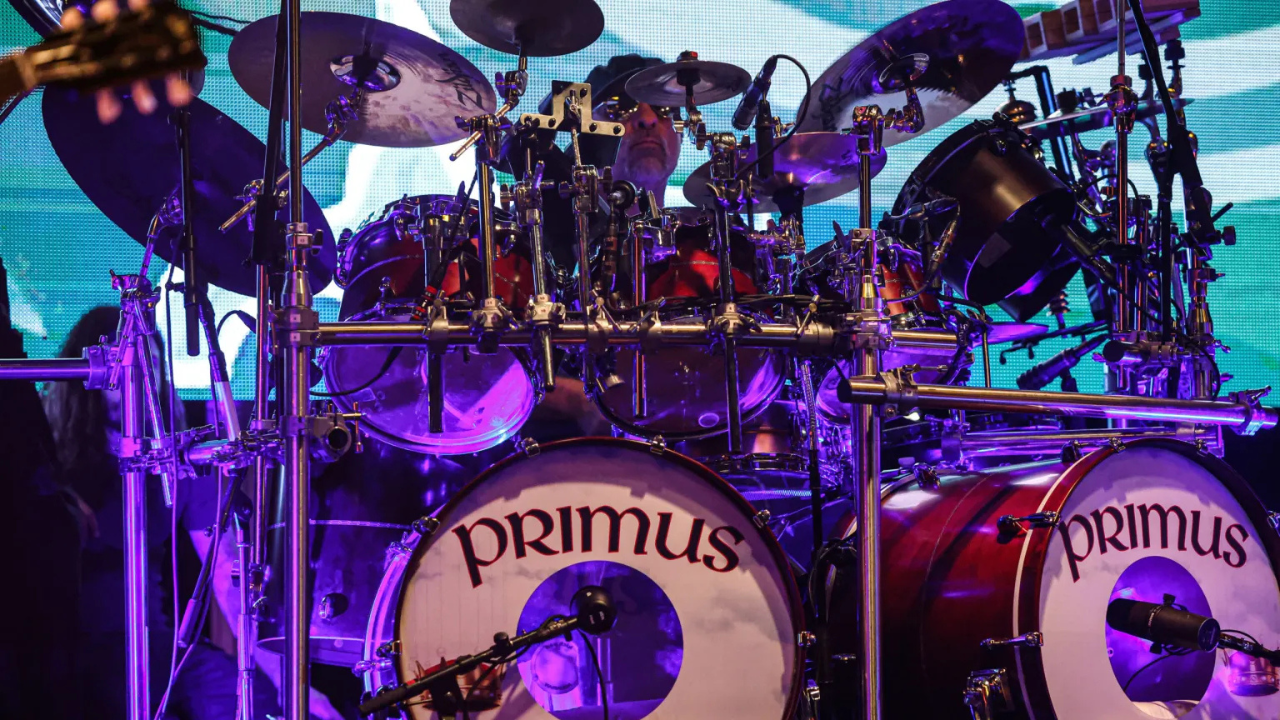
The clearest image of time in Alexander’s account is a basement. As a teenager, he spent time there listening to Rush albums and trying to work out how to play them. Decades later, during a tour in which his band played Rush’s A Farewell to Kings in full, he found himself onstage playing those songs.
He says he thought about Neil Peart as he played. He was also thinking about that teenager in the basement, working through the records. The Rush musicians were no longer distant figures on an album. He knew them as people. When Geddy Lee and Alex Lifeson watched from the side of the stage in Toronto, Alexander described the experience as carrying a strong spiritual quality.
The story's power lies in the distance between those two rooms. One is private: a young player listening, testing his understanding against music he loves. The other is a stage, decades later, with the people behind those records nearby. It would be easy to turn that into a tale about success. But Alexander’s recollection keeps the focus on something more direct. He was still responding to the music that had held his attention as a teenager.
That connection doesn't promise that every basement leads to a stage. It reminds us that a musician’s history is not just a sequence of career milestones. It also records what keeps drawing the ear back. A song learned in one room can return in another with a different weight. The player has changed. The music is still in conversation with the person who first tried to understand it.

A Different Chapter in His Career
In a 2024 public statement published by Rolling Stone, Alexander described his professional change as a decision rooted in love for himself, his family, and the life he wanted to build. He also spoke about a period of intensive mental health rehabilitation and the physical toll of nearly four decades of drumming, including the aftermath of open-heart surgery.
Through those changes, one thing remained clear in Alexander's own words: his love for drumming hadn't changed.
And he continues to share that love with other musicians.
In a 2025 conversation with DrumHeads Media, Alexander discussed his continued involvement in music, including Stick Academy, the online platform he founded to share his approach to drumming, composition, and the musical choices that shape a player's individual sound. His course Composing the Unspeakable focuses on drum composition and songwriting for drummers. The premise behind it matches his playing philosophy. A drummer makes choices, not simply repeats patterns. A small foundation can be combined and shaped into something recognizable.
The deeper idea running through his teaching is that every drummer has a voice worth finding, and the goal isn't to produce copies of him. Stick Academy emphasizes helping drummers understand why they play what they play and how their musical choices affect what listeners hear and feel. Alexander brings decades of experience writing, recording, and performing, sharing what he's learned so other drummers can explore those ideas and develop their own approach to music.
Composition gives a name to something his playing already suggested. Teaching gives it a place to live.
Another thread in his current work shows the same instinct. Through his Composition Labs, Alexander brings experienced drummers together for live conversations about how music gets made. His upcoming session with Stephen Perkins of Jane’s Addiction on December 5 will explore composition, groove, feel, and the creative decisions behind their music. The format is a conversation rather than a lecture, and the value for the drummers watching is in hearing experienced musicians think out loud about choices that are usually invisible from the outside. Just as Alexander learned from listening to other musicians, he now creates opportunities for drummers to learn from one another, share ideas, and explore different approaches to making music.
On October 24 and 25, Alexander is scheduled to take part in The UK Drum Show in Liverpool. The show's Education Room, hosted by Mike Johnston, brings drummers together for lessons and conversations with experienced musicians throughout the weekend. It is the same work in a different room: a player who learned by listening, standing in front of other players and sharing what he's figured out so far.
Four decades in, Tim Alexander's journey has taken him from a kid banging on things to a teenager learning Rush songs in his basement, to performing on stages around the world. Today, he continues to create music, explore new ideas, and share what he's learned with other drummers. After more than 40 years, his musical journey is still unfolding.